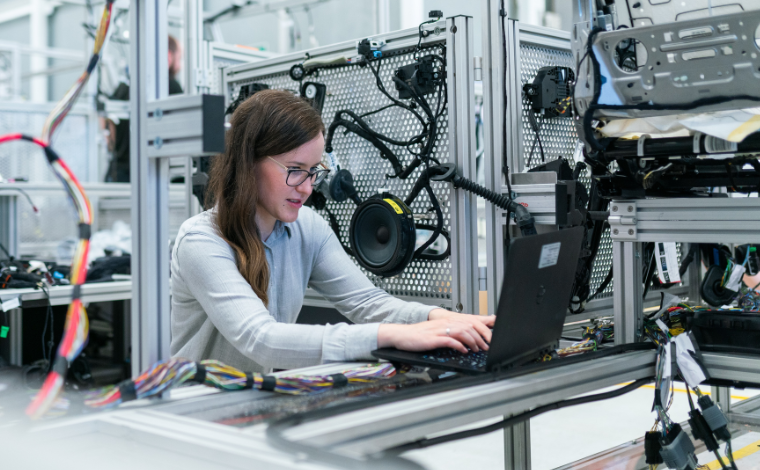
The application of vacuum technology in manufacturing and automation has revolutionized how industries handle production, assembly, and quality control. Vacuum systems use pressure differences to handle materials precisely, package efficiently, and keep production clean, boosting productivity and product quality in modern manufacturing. In this article, we will look at how vacuum technology helps make manufacturing and automation more efficient, reliable, and innovative.
Understanding Vacuum Technology in Industry
Vacuum technology involves creating low-pressure environments by removing air or gases from a sealed space. This controlled reduction in pressure is critical across industries for improving precision, efficiency, product quality, and safety.
Key Points:
- Industrial Applications: Vacuum technology helps industries work more efficiently and accurately.
- Process Benefits: Enables drying, coating, sterilization, vacuum sealing, and pick-and-place automation with higher accuracy.
- Quality and Safety: Reduces contamination, oxidation, and spoilage, protecting both products and sensitive materials.
- Efficiency: Speeds up operations, lowers energy use, and reduces maintenance by centralizing vacuum systems.
Vacuum technology is an essential tool in today’s industry, helping make manufacturing and scientific processes cleaner, faster, and more reliable.
Applications in Material Handling and Robotics
Vacuum technology plays a key role in automated material handling and robotics, enabling precise, safe, and efficient movement of products.
- Vacuum Grippers: These let robots lift and move items securely without using clamps, keeping delicate or oddly shaped parts safe.
- Pick-and-Place Systems: These systems automatically move parts in industries like electronics, plastics, and food, making the process faster and more accurate.
- Conveyors and Transport Systems: Move products smoothly without friction or damage, especially for fragile or sensitive materials.
- Integration with Automation: Vacuum systems easily integrate with robotic arms, assembly lines, and smart manufacturing systems for streamlined production.
Vacuum technology helps robots and automated systems handle materials more accurately, efficiently, and reliably.
Applications in Packaging and Processing
Vacuum technology is widely used in packaging and processing to improve product quality, safety, and shelf life.
- Vacuum Packaging: Removing air from packages helps keep products fresh, safe, and longer-lasting.
- Vacuum Sealing and Forming: Used in automated packaging machines to shape and seal materials precisely.
- Freeze-Drying (Lyophilization): Removes moisture without heat to keep pharmaceuticals, biological samples, and long-lasting products.
- Vacuum Drying and Coating: Speeds up processes like drying, curing, and applying coatings while maintaining product quality.
Vacuum systems in packaging and processing keep products safe, make operations more efficient, and ensure consistent high quality.
Applications in Electronics and Semiconductor Manufacturing
Vacuum technology is essential in electronics and semiconductor industries, where clean, controlled environments are critical for high-precision processes.
- Wafer Processing: Vacuum ensures contamination-free conditions for etching, doping, and patterning of semiconductor wafers.
- Thin-Film Deposition: Thin-film deposition applies very thin layers of material onto surfaces. Methods like CVD and PVD use a vacuum to ensure the layers are even, high-quality, and clean. This process is commonly used in electronics, optics, and advanced coatings.
- Etching and Coating: Vacuum environments enable precise removal or addition of materials without introducing impurities.
- Electron Microscopy and Testing: High and ultra-high vacuum levels let electron microscopes work accurately, allowing detailed inspection of materials and devices.
Vacuum technology helps make electronic and semiconductor components with high quality, accuracy, and reliability.
See also: Innovative Classroom Technologies Transforming Education
Applications in Automotive
Vacuum technology plays a crucial role in automotive manufacturing and assembly, including:
- Material Handling: Lifting and transporting body panels, glass, and other components safely using vacuum grippers and suction systems.
- Robotic Automation: Pick-and-place systems for assembling parts quickly and accurately.
- Vacuum Forming: Shaping plastic components such as dashboards, trims, and interior panels.
- Brake Systems & Engines: Vacuum is used in brake boosters, emission controls, and certain engine components for performance and safety.
- Packaging & Logistics: Vacuum systems help in handling and packaging automotive parts efficiently within factories.
These applications improve precision, reduce damage, increase production speed, and ensure safety in automotive operations.
Applications in Glass Manufacturing
Vacuum technology is widely used in the glass industry to improve handling, processing, and quality control:
- Handling Glass Panes: Vacuum suction cups lift and transport fragile glass sheets safely without mechanical damage.
- Automated Pick-and-Place: Vacuum systems enable precise placement of glass in production lines, reducing breakage and errors.
- Laminating and Coating: Vacuums remove air bubbles between layers or during coating processes to ensure smooth, defect-free surfaces.
- Tempering and Forming: Controlled vacuum environments assist in shaping and tempering glass with high precision.
Vacuum technology enhances safety, efficiency, and quality in glass production and processing.
Applications in Metal Fabrication
Vacuum systems are essential in metal fabrication for handling, processing, and finishing tasks:
- Lifting and Handling Sheets: Vacuum suction cups safely lift and move metal sheets, even oily or sharp-edged ones, reducing the risk of injury or material damage.
- Pick-and-Place Automation: Enables precise placement of metal components in assembly lines, improving speed and accuracy.
- Vacuum Forming and Bending: Helps shape metal parts by holding them securely during forming processes.
- Surface Coating and Plating: Creates controlled low-pressure environments for vacuum coating, plating, and evaporation processes, ensuring uniform finishes and preventing oxidation.
Vacuum technology in metal fabrication improves safety, precision, and production efficiency while ensuring high-quality results.
Advantages of Vacuum Technology in Manufacturing and Automation
Vacuum technology offers multiple benefits that improve efficiency, quality, and reliability in industrial processes:
- Precise Material Handling: Vacuum grippers and pick-and-place systems move components accurately without mechanical damage, which is essential for delicate or small parts.
- Faster Operations: Speeds up processes like assembly, packaging, coating, and drying, increasing overall production efficiency and throughput.
- Improved Product Quality: Reduces contamination, protects heat-sensitive materials, and maintains consistency, resulting in safer, higher-quality products.
- Energy and Cost Efficiency: Centralized vacuum systems reduce the number of pumps, lower maintenance needs, and decrease energy consumption, cutting operational costs.
- Reduced Downtime: Fewer mechanical parts in contact with products mean less wear and tear, improving reliability and continuous operation.
- Versatility and Integration: Works with a wide range of materials and products and can easily integrate with robotic and automated systems for smart manufacturing.
Vacuum technology helps manufacturing work more accurately, quickly, and efficiently, improving product quality and reliability.
Innovations and Future Trends in Vacuum Technology
Vacuum technology is advancing quickly with better materials, smarter automation, and energy-efficient systems. Some important new developments and trends are:
- Smart Sensors and IoT Integration
Modern vacuum systems are increasingly equipped with sensors and connected to the Internet of Things (IoT) for real-time monitoring, predictive maintenance, and data-driven process optimization. This reduces unplanned downtime and improves reliability.
- Energy Efficiency and Sustainability
New vacuum systems are designed to use less energy by using adjustable-speed motors, smarter controls, and ways to reuse energy. This helps save money and is better for the environment.
- Compact, Modular, and Multi-Stage Designs
Smaller, flexible vacuum units with multiple stages can create stronger vacuums even in limited spaces. They are easy to expand or adjust and deliver better performance for different industrial needs.
- Advanced Materials and Coatings
Using advanced materials such as ceramics, specialized metals, and durable coatings makes vacuum systems more reliable. This allows them to operate safely and efficiently, even in high-temperature or corrosive environments.
Future vacuum technology will be smarter, more energy-efficient, and flexible. It will work well with automated systems, save energy, and provide reliable performance in many industries.